In the spring of 2018, we applied for a Heritage Barn Grant from the State of Washington to help us address critical structural issues and prevent the barn from collapsing. We are grateful to have been awarded that grant, which allowed us to move forward with critical elements of preservation work. We’re excited to finally share that the project is complete, and take you through how it all came together.
Beginning the Preservation Work
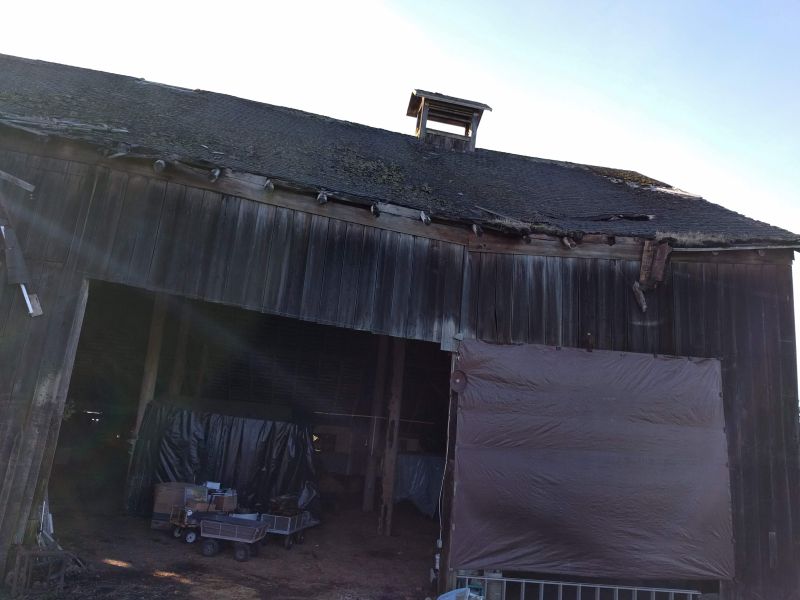
Once the grant was awarded, the work began quickly. The first priority was stabilizing the structure so the barn could safely withstand additional weather and seasonal stress.
Work focused on reinforcing key support columns and repairing structural members where deterioration had occurred. In several areas, original beams were replaced with rough cut timbers to match original beams used throughout the barn. In some cases, additional adjustments were needed once work began in order to properly align sections of the roof structure and ensure long-term stability.
“Big Red” and Unexpected Help
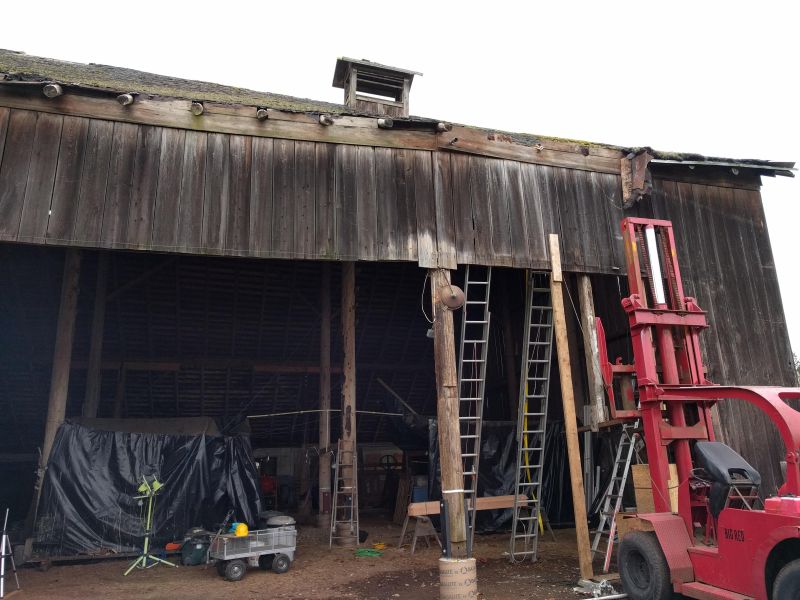
During the project, our forklift—affectionately named “Big Red”—became an unexpectedly essential part of the process.
In addition to moving materials and assisting with structural work, it was also used to help temporarily support a sagging section of the roof while repairs were underway. This proved especially important when an unexpected snowstorm brought nearly two feet of snow to the area. That combination of preparation and timing was the reason the barn survived the storm; had Big Red not been in place with structural support a large portion of the eastern section of roof would have collapsed. Sadly, other local Sequim barns were not as lucky.
Roof Preservation
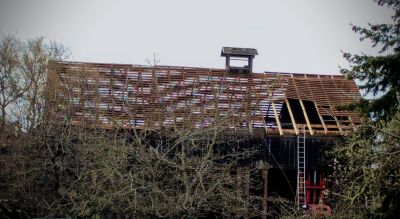
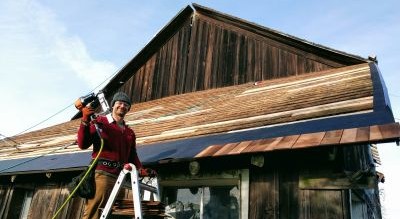
One of the most significant parts of the project was addressing the barn roof, which had been severely damaged in recent windstorms. Originally, we explored replacing it with a metal roof. However, after evaluating the structure and consulting with a family member who is a professional roofer, we determined that cedar shakes would better accommodate the variations in the barn’s structure. Locally sourced cedar was carefully selected and matched as closely as possible to the original materials, including rough cut skip sheeting used beneath the roof.
Cupola Reconstruction and Final Structural Work
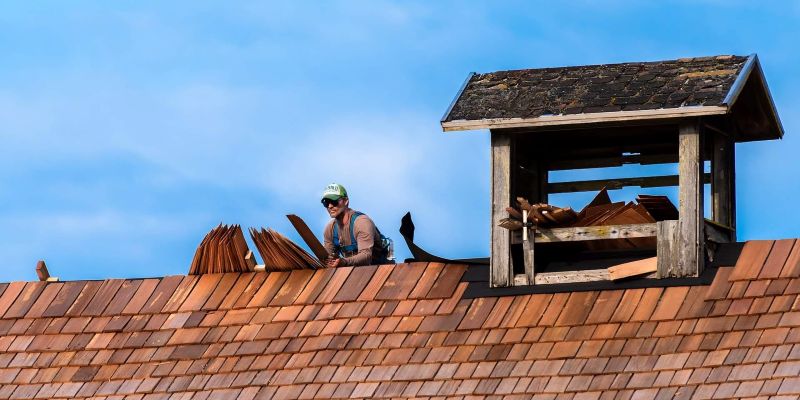
Another important part of the project involved rebuilding the barn’s cupola, which had been damaged in previous windstorms. It was reconstructed to match the original design as closely as possible, and additional reinforcements were made to preserve the remaining original structure.
Where Things Stand Now
The Heritage Barn Grant allowed us to complete all of the critical stabilization work within a relatively short period of time. While the barn still requires ongoing care and additional preservation work, it is now structurally secure enough to remain standing and in use as part of our farm.
Future work may include continued siding repair, electrical updates, and additional improvements to support both farm operations and long-term preservation.
Final Stages of the Work
If you’d like to see a short look at the final stages of the work, check out this short video showing the cupola restoration!
Continuing the Story
We are deeply grateful for the support of the State of Washington Heritage Barn Program and for the opportunity to preserve this important structure for future generations. This project changed not only the barn, but how we think about its future. It remains an active part of our working farm—used for storage, lavender processing, and our farm store—while also serving as a connection to the agricultural history of the Dungeness Valley.
You can read more about the barn history and origins of the project here:
Lotzgesell Barn History
Barn Preservation Project
We are always interested in learning more! If you have any additional information about the Lotzgesell family, property or barn, or photos of the barn, please contact us. We would love to hear from you!